
- All
- Product Management
- News
- Introduction
- Enterprise outlets
- FAQ
- Enterprise Video
- Enterprise Atlas

Chinese researchers found natural graphene in lunar soil samples for the first time
Release time:
2024-09-27 15:51
Jilin University News Network reported on June 21 that recently, Professor Zou Meng, Professor Zhang Wei, Li Xiujuan, a senior engineer of Jilin University, and Ren Wencai, a researcher at the Institute of Metals of the Chinese Academy of Sciences, etc., through the Chang'e -5 drilling cuttings lunar soil (No. CE5Z0806YJYX004) Observation and analysis, for the first time found a naturally formed few layersGraphitealkene. Related research provides new insights into the geological activities and evolution history of the moon and the environmental characteristics of the moon, broadens people's understanding of the complex mineral composition of the lunar soil, and provides important information and clues for the use of the moon's in situ resources. The research results, entitled "Discovery of Natural Few-Layer Graphene on the Moon", were published in the National Science Review on June 17.
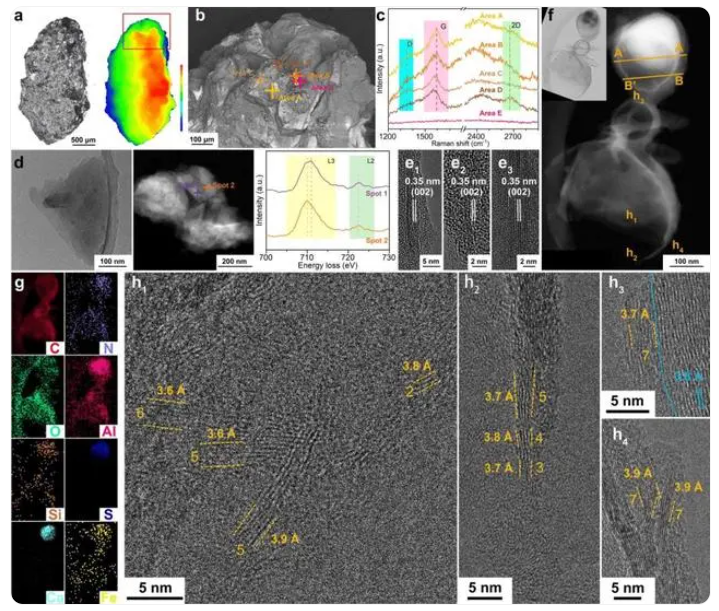
Fig. 1 CE-in May soil samplesnatural grapheneAdvanced electron microstructural characterization and spectroscopic analysis
Previous reports have pointed out that by observing the global flux of carbon ions on the moon, researchers believe that there is primary carbon on the moon, and it is feasible to use the characterization of lunar samples to reveal the crystal structure of the primary carbon phase. With its novel physical phenomena and extraordinary properties, graphene is playing an increasingly important role in a wide range of fields, including planetary and space science. It is estimated that about 1.9 per cent of the total interstellar carbon is in the form of graphene, whose morphology and properties are determined by the specific formation process, so the composition and structural characteristics of natural graphene will provide important reference and information for the geological evolution of stars and the in situ resource utilization of the Moon.
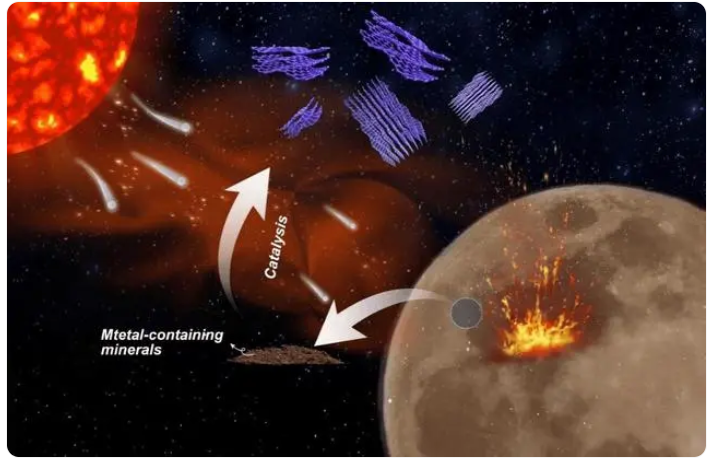
Fig.2 Possible formation process of few-layer graphene on the moon
In this study, the scientific research team used electron microscopy-La United technology to collect Raman spectra at locations with relatively high carbon content in lunar soil samples, confirming that the crystalline quality of graphite carbon in lunar soil samples is relatively high. It is worth noting that the areas where carbon is present in the lunar soil samples contain iron compounds, which are closely related to the formation of graphene. Through the comprehensive application of various characterization techniques such as scanning electron microscopic imaging, transmission electron microscopic imaging, high-angle annular dark field image and high-resolution image of spherical aberration electron microscope under freezing conditions, energy spectrum and electron energy loss spectrum, flight secondary mass spectrometry, and the rigorous comparative analysis of test results, the graphite carbon detected in lunar soil samples was explored and confirmed to be few-layer graphene (2-7 layers), it is proposed that the formation of few-layer graphene and graphitic carbon may originate from the mineral catalytic process induced by the solar wind and the early volcanic eruptions of the moon.
Professor Zhang Wei from the Department of Materials Science and Engineering of Jilin University is the first author of this article, and Professor Zou Meng from the Key Laboratory of Engineering Bionics of the Ministry of Education, Li Xiujuan, a senior engineer, and Ren Wencai, a researcher at the Shenyang National Laboratory of Materials Science, Institute of Metal Research, Chinese Academy of Sciences, are the co-corresponding authors of this article. Test Analysis and Characterization Team, Electron Microscope Center, Jilin University, School of Physics,superhard materialThe State Key Laboratory and the Center for Extreme Conditions and High Pressure Science have given great support to this research work. The research results were jointly completed by researcher Ma Laipeng of the Institute of Metal Research of the Chinese Academy of Sciences, Professor Zhang Rui of Jilin University, Associate Professor Li Xinyang, Professor Zheng Weitao, Professor Zhou Qiang, Professor Li Fangfei, Researcher Liu Hongyan, Researcher Hu Zhenyu of the National Deep Space Exploration Laboratory, and Researcher Liu Li of the Exploration Moon and Space Engineering Center. The relevant work has received valuable support from the National Lunar Exploration Center for lunar soil samples and general project funding from the National Fund.

Concerned about the public.
Copyright©Superhard Materials Branch of China Machine Tool Industry Association